
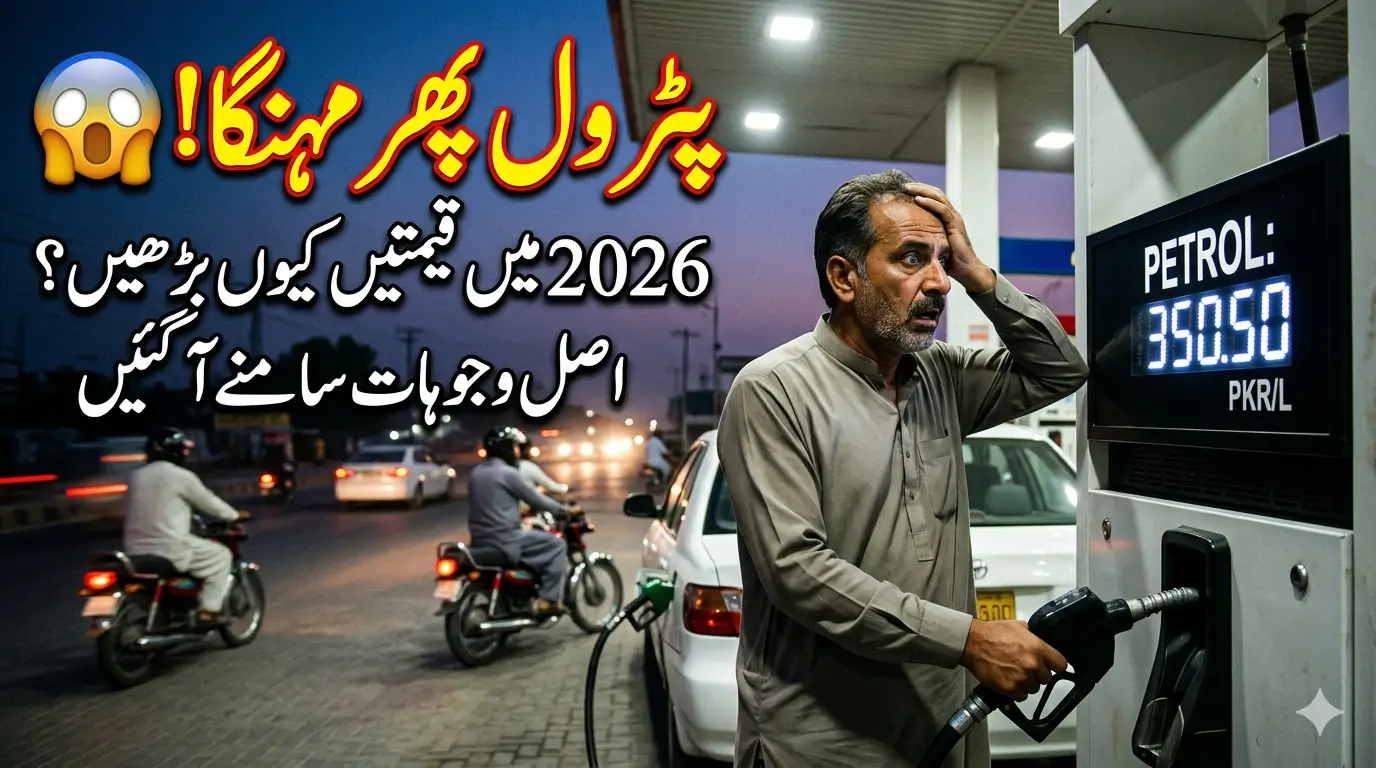
Oil prices in Pakistan are increasing in 2026 mainly due to higher international crude oil rates, a weaker Pakistani rupee, rising government taxes, and reduced fuel subsidies. Pakistan imports most of its fuel, so any global price change quickly affects local petrol and diesel rates. In this article, you will learn the key reasons behind recent price hikes and how both global and local factors are involved.
Global crude oil prices are rising
One of the main reasons for higher petrol prices in Pakistan is the increase in global crude oil prices. Oil is traded internationally, and when prices go up in the global market, importing countries like Pakistan have to pay more.
In 2026, global oil markets will remain unstable due to supply concerns and ongoing geopolitical tensions. Even small disruptions can push prices higher because demand for oil remains strong worldwide.
Pakistan depends heavily on imported oil
Pakistan produces only a limited amount of oil locally. Most of the country’s fuel needs are met through imports, especially from Middle Eastern countries.
This heavy dependence means that any increase in international prices directly raises the cost of petrol and diesel in Pakistan. The import bill also increases, putting pressure on the country’s economy.
Rupee depreciation increases import cost
Another major factor is the falling value of the Pakistani rupee against the US dollar. Since oil is bought in dollars, a weaker rupee makes imports more expensive.
Even if global oil prices stay the same, a drop in the rupee’s value can still increase local fuel prices. This is why exchange rate changes are closely linked to petrol price adjustments in Pakistan.
Government taxes on petroleum products
A significant portion of fuel prices in Pakistan comes from taxes and duties. These include petroleum levy, sales tax, and other charges.
In 2026, the government has continued to rely on petroleum taxes to meet revenue targets. This means that even when global prices are stable, local fuel prices may remain high due to these added costs.
Changes linked with IMF program
Pakistan’s economic agreements with international lenders also affect fuel pricing. Under current arrangements, the government is required to limit subsidies and adjust fuel prices according to market conditions.
This has reduced the practice of keeping petrol artificially cheap. As a result, consumers now feel the full impact of global oil price changes.
Key reasons behind recent price hikes
Several factors are working together to increase oil prices in Pakistan:
- Higher global crude oil rates
- Weak Pakistani rupee against the dollar
- Increased petroleum taxes and reduced subsidies
These combined pressures make fuel prices more volatile and harder to control.
Effect of oil prices on daily life
Rising oil prices do not only affect transport. They also increase the cost of many everyday items.
When fuel becomes expensive, transportation costs go up. This affects food prices, public transport fares, and electricity generation. In 2026, many households will already be feeling the impact through higher expenses.
Recent petrol price trend in Pakistan
Fuel prices in Pakistan have shown a rising trend in recent months, with frequent adjustments based on market conditions.
| Period | Price Direction | Main Factor |
|---|---|---|
| Early 2026 | Slight increase | Global oil recovery |
| March 2026 | Noticeable rise | Currency pressure |
| April 2026 | Sharp increase | Taxes and import cost |
| Current trend | Fluctuating | Market uncertainty |
These changes show how quickly fuel prices can move depending on both global and local developments.
Will petrol prices decrease in 2026?
There is a possibility that oil prices may decrease, but it depends on several conditions. If global supply improves or tensions ease, prices could come down.
A stronger rupee could also help reduce import costs. However, local taxes and policy decisions will still play a major role in determining final prices for consumers.
Common questions about oil prices
Why do petrol prices change frequently in Pakistan?
Fuel prices are reviewed regularly based on global oil rates, exchange rates, and government taxes. This leads to frequent adjustments.
Why is petrol expensive even when global prices fall?
Local taxes and currency depreciation can keep prices high even if international oil rates decrease.
Does Pakistan have its own oil reserves?
Pakistan does have some oil reserves, but production is limited and not enough to meet national demand.
Conclusion
Oil prices in Pakistan are influenced by a mix of international market trends and domestic economic factors. As long as the country relies heavily on imported fuel and the rupee remains under pressure, petrol prices are likely to stay unstable. Government policies and global conditions will continue to shape future price changes.