
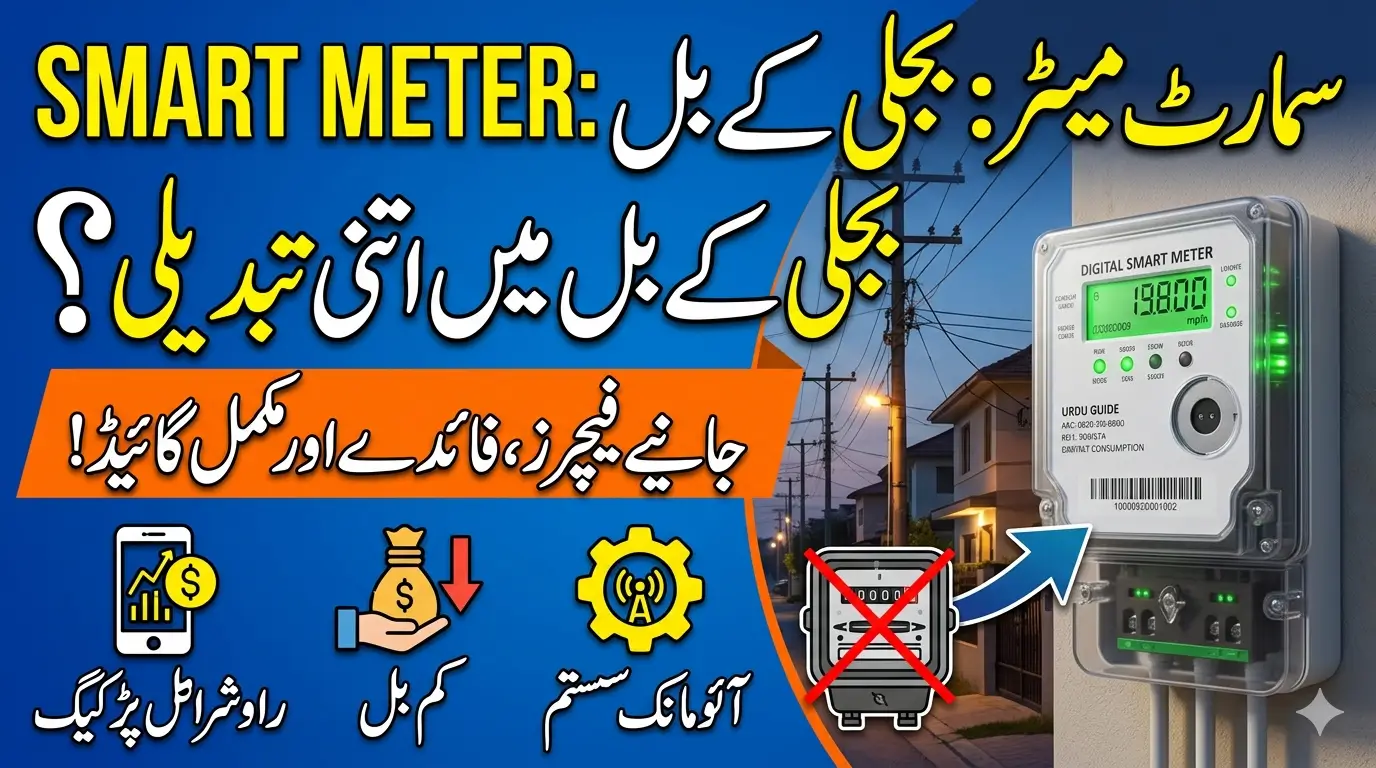
A smart meter is a digital electricity or gas meter that automatically records your usage and sends it to the utility company without manual reading. In Pakistan, smart meters are being introduced to replace old analog meters, helping improve billing accuracy and monitoring. This guide explains how smart meters work, their features, benefits, and what users should know before installation.
8070 Rashan Program Check Online
How a Smart Meter Works
A smart meter tracks electricity consumption in real time or at short intervals during the day. Instead of a meter reader visiting your home, the device sends usage data directly to the electricity company through a communication system such as a mobile network.
This system reduces human involvement, which means fewer chances of reading errors. It also allows faster updates of your monthly bill.
Why Smart Meters Are Being Introduced in Pakistan
Pakistan’s power sector faces issues like incorrect billing, delayed readings, and electricity theft. Smart meters help address these problems by providing accurate, time-based data.
In cities like Lahore, Karachi, and Islamabad, pilot projects have already started. Based on current information, wider installation is expected in phases depending on infrastructure and funding.
Main Features of Smart Meters
Smart meters are different from traditional meters because they offer more than just a reading. They give both the user and the provider better control over electricity usage.
- Automatic data transmission to the utility company
- Real-time or near real-time usage tracking
- Detection of unusual consumption patterns
These features make monitoring easier and more transparent.
Benefits for Households
For everyday users, the biggest advantage is knowing how much electricity is being used at any time. This helps people manage their appliances more carefully.
Accurate billing is another benefit. Since the reading is taken automatically, estimated bills are reduced. This can help avoid sudden bill adjustments in later months.
Effect on Electricity Bills
A smart meter itself does not reduce your electricity cost. It simply records actual usage more precisely. However, when users can see their consumption patterns, they may change habits to lower usage.
In the future, some areas may introduce time-based tariffs. This means electricity could cost less during off-peak hours, giving users a chance to save if they adjust their usage.
Installation Process in Pakistan
Smart meter installation is usually handled by the electricity distribution company. Consumers are informed when their area is selected.
Below is a simple overview of how the process works:
| Stage | What Happens |
|---|---|
| Selection | Area is chosen for smart meter upgrade |
| Notice | Consumers receive prior information |
| Replacement | Old meter is removed and new one installed |
| Setup | Meter is connected to the system |
Residents may be asked to show identification like a CNIC, during installation.
Safety and Data Concerns
Smart meters use low-level signals to send data, similar to mobile communication. These signals are within accepted safety limits.
Data privacy is also considered. The information collected is mainly used for billing and system management. Users should still stay aware of official policies regarding data handling.
Common Questions in Pakistan
Many users worry that smart meters will increase their bills. In most cases, any change in billing reflects actual usage rather than estimation errors.
Another concern is technical faults. Like any digital device, issues can occur, but support systems are expected to improve as more meters are installed.
Redmi K90 Max – Full Specifications,
FAQs
Can I monitor my electricity usage at home?
Yes, some systems allow users to check their consumption through mobile apps or online portals, depending on the electricity provider.
Do smart meters need internet at home?
No, they do not use your home internet. They have their own communication system to send data.
Will old meters be completely replaced?
Based on current updates, traditional meters are expected to be gradually replaced in selected areas over time.
Final Thoughts
Smart meters are changing how electricity usage is tracked in Pakistan. They provide accurate readings and reduce the need for manual checks. As more areas shift to this system, users will have better visibility of their consumption and clearer billing records.